Why Does Hot Tire Pickup Peel Some Garage Floor Coatings
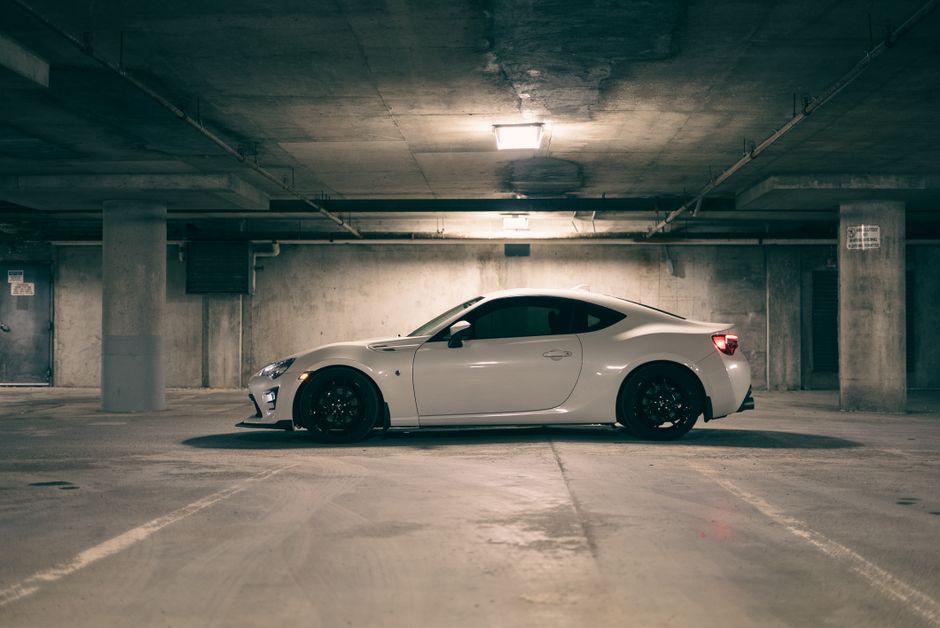
Park a car on a coated floor after a long July drive and then look at the tire track once the tires cool. The breakdown sitting on riverside epoxy flooring ruts n guts lists the causes in order, and the first is always heat. A garage in Riverside, CA that sits closed all afternoon can reach a temperature well above what the outdoor air shows, and hot rubber on a soft epoxy film will pull the film up with it.
What exactly is hot tire pickup?

Tires carry plasticizer oils, and those oils soften as the tread heats up. A tire that has just left the highway presses those oils against the coating, and a film that has not cured hard enough bonds to the rubber instead of the floor. When the car pulls out the next morning, a patch of coating comes with it. The marks appear first where the tires sit, and they are most common in the Inland Empire summer, when garage floors stay warm after sundown.
Why do some epoxy floors fail and others hold?
A standard epoxy is hard but not heat tolerant. Thin versions soften around the temperature a tire reaches. A full cure matters as well. A floor driven on after two days instead of a week is much more likely to lift, because the cross-linking is still going on under the tire. The same coating on the same slab will hold if it is given time and the right topcoat.
Which topcoats resist it?
Polyaspartic and urethane topcoats have far better resistance to heat and plasticizers than epoxy alone, and a polyurea base can add to that. A two-part urethane clear coat over a flake or solid color base is the usual answer. The topcoat has to go on within the recoat window of the base, otherwise it bonds weakly and the problem moves up a layer.
Does the floor need a special prep?
The prep is the same as for any other garage floor, with diamond grinding to open the surface, repair of any cracks and a clean vacuum pass. What changes is the system on top. A thin film build can be fine under a car that rarely moves and fail under a daily truck, so the mil thickness of the base and the topcoat together is chosen for the vehicle, not the look.
What can be done after a floor has already lifted?
A lifted patch is cut back to sound coating, the edge is ground to a feather, and the area is rebuilt with a primer and a new topcoat. A full recoat is cleaner than a spot repair when several tracks have lifted, since patches show through the finish.